http://hotjobs.yahoo.com/career-articles-the_6_most_annoying_coworkers_are_you_one-431
The 6 Most Annoying Coworkers: Are You One?
by Doug White, Robert Half International
Nearly every workplace has them: the Naysayer, who dismisses team members' ideas; the Spotlight Stealer, who claims credit for a colleague's efforts; and other annoying coworkers who make collaboration difficult. Following are six professionals whose irritating behaviors and irksome attitudes prevent them from forming productive relationships at work -- and what you should to do avoid following in their footsteps:
1. The Naysayer. This office dweller delights in shooting down ideas. Even during "blue sky" brainstorming sessions, where all suggestions are to be contemplated with an open mind, the Naysayer immediately pooh-poohs any proposal that challenges the status quo.
The right approach: Because great solutions often rise from diverse opinions, withhold comment -- and judgment -- until the appropriate time. Moreover, be tactful and constructive when delivering criticism or alternative viewpoints.
2. The Spotlight Stealer. There is definitely an "I" in "team" according to this glory seeker, who tries to take full credit for collaborative efforts and impress higher-ups. This overly ambitious corporate climber never heard a good idea he wouldn't pass off as his own.
The right approach: Win over the boss and colleagues by being a team player. When receiving kudos, for instance, publicly thank everyone who helped you. "I couldn't have done it without ..." is a savvy phrase to remember.
3. The Buzzwordsmith. Whether speaking or writing, the Buzzwordsmith sacrifices clarity in favor of showcasing an expansive vocabulary of cliched business terms. This ineffective communicator loves to "utilize" -- never just "use" -- industry-specific jargon and obscure acronyms that muddle messages. Favorite buzzwords include "synergistic," "actionable," "monetize," and "paradigm shift."
The right approach: Be succinct. Focus on clarity and minimize misunderstandings by favoring direct, concrete statements. If you're unsure whether the person you are communicating with will understand your message, rephrase it, using "plain English."
4. The Inconsiderate Emailer. Addicted to the "reply all" function, this "cc" supporter clogs colleagues' already-overflowing inboxes with unnecessary messages. This person also marks less-than-critical emails as "high priority" and sends enormous attachments that crash unwitting recipients' computers.
The right approach: Break the habit of using email as your default mode of communication, as many conversations are better suited for quick phone calls or in-person discussions. The benefit? The less email you send, the less you're likely to receive.
5. The Interrupter. The Interrupter has little regard for others' peace, quiet or concentration. When this person is not entering your work area to request immediate help, the Interrupter is in meetings loudly tapping on a laptop, fielding calls on a cell phone, or initiating off-topic side conversations.
The right approach: Don't let competing demands and tight deadlines trump basic common courtesy. Simply put, mind your manners to build healthy relationships at work.
6. The Stick in the Mud. This person is all business all of the time. Disapproving of any attempt at levity, the constant killjoy doesn't have fun at work and doesn't think anyone else should either.
The right approach: Have a sense of humor and don't be afraid to laugh at yourself once in awhile. A good laugh can help you build rapport, boost morale, and deflate tension when working under stressful situations.
It's fairly easy to spot the qualities that make the above individuals irritating -- at least when the behaviors are displayed by others. It can be a challenge to recognize when you exhibit them yourself. You may not realize, for instance, that you always pepper your communications with industry- or company-specific jargon, even when speaking with new employees or outside contacts. Though you may not be a full-fledged Interrupter or Stick in the Mud, take care to avoid heading down their paths.
The best advice: Remember common courtesy and act toward others as you want them to act toward you.
Monday, June 30, 2008


i can do a chest x-ray.
this looked interesting because i work in the cat scan department, but i don't actually do the cat scan.
http://news.yahoo.com/s/time/20080630/hl_time/howdangerousarectscans
How Dangerous Are CT Scans?
By CATHERINE GUTHRIE Mon Jun 30, 6:55 PM ET
Computed tomography (CT or CAT) scans help doctors detect everything from cancer to kidney stones. But some physicians are raising concerns about the safety of such procedures - most notably, an increase in cancer risk. A CT scan packs a mega-dose of radiation - as much as 500 times that of a conventional X-ray. If your doctor orders a CT scan for you or your child, should you think twice?
Absolutely, say researchers behind two recent studies that sound the alarm about the increased cancer risk associated with multiple CT scans. In the first study of its kind, physicians at hospitals in Florida and Washington, D.C., evaluated the medical-imaging records of 1,243 randomly selected patients to calculate just how much radiation each patient had sustained in the past five years. Although CT scans were the biggest source of radiation, other offenders included X-rays and mammograms. The results of the study, presented in May at the annual conference of the Society for Academic Emergency Medicine, were disturbing: the average patient had received 45 millisieverts (mSv) of radiation. (The typical chest X-ray dispatches 0.02 mSv of radiation.) And 12% of patients had gotten more than twice that amount - 100 mSv or more. "Our focus is to bring awareness to the fact that people are getting large doses of radiation and it's not innocuous," says Timothy Bullard, the study's lead author and chief medical officer at Orlando Regional Medical Center. "We want people to use the technology appropriately."
"Appropriate" is the key word - especially since a review study published last November in the New England Journal of Medicine determined that as many as one-third of all CT scans performed in the United States are unnecessary. The authors take issue with the "perhaps 20 million adults and, crucially, more than 1 million children per year in the United States [who] are being irradiated unnecessarily." Part of the problem, the authors say, is that patients are being prescribed multiple, unneeded CT scans, a predicament that could be avoided with better communication between physicians. "Having the same CT scan twice is ridiculous," says David Brenner, the review's lead author and director of the Center for Radiological Research at Columbia University Medical Center. "There is no excuse." In one of the review's highlighted studies, among patients undergoing CT scans, 30% were on their third scan, 7% had five or more, and 4% had more than nine. Also to blame: doctors increasingly practicing defensive medicine. "There is an underlying philosophy that you're at fault if you miss anything," says Bullard. "The goal is to be perfect every time." Plus, he notes, CT scans have no immediate negative side effects. "They are quick, painless, and send patients away with the sense of satisfaction that everything's been done."
Exactly how much radiation is too much? Because CT scans came into vogue in the 1980s and radiation-induced cancer takes roughly 20 years to develop, long-term studies of CT scans and cancer are still under way. But scientists are already anticipating future health implications. Indeed, researchers found a population of 25,000 Japanese post-atomic-bomb survivors who were exposed to roughly the same amount of radiation as two CT scans. Based in part on those studies, the Food and Drug Administration estimates that an adult's lifetime risk of developing radiation-induced cancer from a CT scan is roughly 1 in 2,000. Worse, the risk for children is even higher.
Compared with adults, children are more sensitive to radiation because they have longer life expectancies and because their cells divide more rapidly, making their DNA more vulnerable to damage. A child's risk of developing a fatal cancer from one CT scan is as high as 1 in 500. Although newer machines can be adjusted to deliver up to 50% less radiation for children and small adults, a 2001 study published in the American Journal of Radiation showed that radiologic technologists (RT) rarely make those adjustments. "Changing technical factors is very easy. It just requires a little thought and a few extra seconds," says Michele Scoglietti, a spokesperson for the American Society of Radiologic Technologists. "But I think there are many RTs who are either not trained to vary the technique, don't know how, are in a hurry or are just lazy."
When doctors first ordered a CT scan for Jen Houck's six-month-old daughter in 2003, the new mom was more worried about the risks of anesthesia (used to keep children from squirming in the machine) than of radiation exposure. In 2006 and 2007, her daughter, now 5, had two additional CT scans, 6 months apart, for what doctors initially thought was a growth abnormality. They've since determined the child was perfectly healthy. "All that, just to find out her head is bigger than normal," says the 27-year-old mother of two in Boone, North Carolina. In hindsight, Houck wishes she had done things a bit differently. "I would have asked more questions about the necessity for a third scan so soon after the second." She also says no one mentioned the option of a low-dose scan, and she has no idea how much radiation her daughter received. "I wish I'd known to ask the question."
So what should you ask, if a doctor recommends a CT scan for you or your child? Brenner suggests the following: is a CT scan really necessary? Might a test that doesn't involve radiation, such as an ultrasound or MRI, do the job? In some cases, a CT scan is absolutely required - for example, for diagnosing severe head trauma or internal injuries, for acute abdominal pain, or to diagnose an existing cancer. If your doctor schedules you for a scan, call ahead to see if you can bring a flash drive. That way you can take an electronic copy of your CT scan to go, and may be able to avoid another scan later, should you move or change doctors. (A hard copy of the scan is bulkier, but may also be an option.) If your child needs a CT scan, ask the technologist to put the machine on pediatric-appropriate settings.
For more information on kids and CT scan safety, visit the Alliance for Radiation Safety in Pediatric Imaging.
View this article on Time.com
http://news.yahoo.com/s/time/20080630/hl_time/howdangerousarectscans
How Dangerous Are CT Scans?
By CATHERINE GUTHRIE Mon Jun 30, 6:55 PM ET
Computed tomography (CT or CAT) scans help doctors detect everything from cancer to kidney stones. But some physicians are raising concerns about the safety of such procedures - most notably, an increase in cancer risk. A CT scan packs a mega-dose of radiation - as much as 500 times that of a conventional X-ray. If your doctor orders a CT scan for you or your child, should you think twice?
Absolutely, say researchers behind two recent studies that sound the alarm about the increased cancer risk associated with multiple CT scans. In the first study of its kind, physicians at hospitals in Florida and Washington, D.C., evaluated the medical-imaging records of 1,243 randomly selected patients to calculate just how much radiation each patient had sustained in the past five years. Although CT scans were the biggest source of radiation, other offenders included X-rays and mammograms. The results of the study, presented in May at the annual conference of the Society for Academic Emergency Medicine, were disturbing: the average patient had received 45 millisieverts (mSv) of radiation. (The typical chest X-ray dispatches 0.02 mSv of radiation.) And 12% of patients had gotten more than twice that amount - 100 mSv or more. "Our focus is to bring awareness to the fact that people are getting large doses of radiation and it's not innocuous," says Timothy Bullard, the study's lead author and chief medical officer at Orlando Regional Medical Center. "We want people to use the technology appropriately."
"Appropriate" is the key word - especially since a review study published last November in the New England Journal of Medicine determined that as many as one-third of all CT scans performed in the United States are unnecessary. The authors take issue with the "perhaps 20 million adults and, crucially, more than 1 million children per year in the United States [who] are being irradiated unnecessarily." Part of the problem, the authors say, is that patients are being prescribed multiple, unneeded CT scans, a predicament that could be avoided with better communication between physicians. "Having the same CT scan twice is ridiculous," says David Brenner, the review's lead author and director of the Center for Radiological Research at Columbia University Medical Center. "There is no excuse." In one of the review's highlighted studies, among patients undergoing CT scans, 30% were on their third scan, 7% had five or more, and 4% had more than nine. Also to blame: doctors increasingly practicing defensive medicine. "There is an underlying philosophy that you're at fault if you miss anything," says Bullard. "The goal is to be perfect every time." Plus, he notes, CT scans have no immediate negative side effects. "They are quick, painless, and send patients away with the sense of satisfaction that everything's been done."
Exactly how much radiation is too much? Because CT scans came into vogue in the 1980s and radiation-induced cancer takes roughly 20 years to develop, long-term studies of CT scans and cancer are still under way. But scientists are already anticipating future health implications. Indeed, researchers found a population of 25,000 Japanese post-atomic-bomb survivors who were exposed to roughly the same amount of radiation as two CT scans. Based in part on those studies, the Food and Drug Administration estimates that an adult's lifetime risk of developing radiation-induced cancer from a CT scan is roughly 1 in 2,000. Worse, the risk for children is even higher.
Compared with adults, children are more sensitive to radiation because they have longer life expectancies and because their cells divide more rapidly, making their DNA more vulnerable to damage. A child's risk of developing a fatal cancer from one CT scan is as high as 1 in 500. Although newer machines can be adjusted to deliver up to 50% less radiation for children and small adults, a 2001 study published in the American Journal of Radiation showed that radiologic technologists (RT) rarely make those adjustments. "Changing technical factors is very easy. It just requires a little thought and a few extra seconds," says Michele Scoglietti, a spokesperson for the American Society of Radiologic Technologists. "But I think there are many RTs who are either not trained to vary the technique, don't know how, are in a hurry or are just lazy."
When doctors first ordered a CT scan for Jen Houck's six-month-old daughter in 2003, the new mom was more worried about the risks of anesthesia (used to keep children from squirming in the machine) than of radiation exposure. In 2006 and 2007, her daughter, now 5, had two additional CT scans, 6 months apart, for what doctors initially thought was a growth abnormality. They've since determined the child was perfectly healthy. "All that, just to find out her head is bigger than normal," says the 27-year-old mother of two in Boone, North Carolina. In hindsight, Houck wishes she had done things a bit differently. "I would have asked more questions about the necessity for a third scan so soon after the second." She also says no one mentioned the option of a low-dose scan, and she has no idea how much radiation her daughter received. "I wish I'd known to ask the question."
So what should you ask, if a doctor recommends a CT scan for you or your child? Brenner suggests the following: is a CT scan really necessary? Might a test that doesn't involve radiation, such as an ultrasound or MRI, do the job? In some cases, a CT scan is absolutely required - for example, for diagnosing severe head trauma or internal injuries, for acute abdominal pain, or to diagnose an existing cancer. If your doctor schedules you for a scan, call ahead to see if you can bring a flash drive. That way you can take an electronic copy of your CT scan to go, and may be able to avoid another scan later, should you move or change doctors. (A hard copy of the scan is bulkier, but may also be an option.) If your child needs a CT scan, ask the technologist to put the machine on pediatric-appropriate settings.
For more information on kids and CT scan safety, visit the Alliance for Radiation Safety in Pediatric Imaging.
View this article on Time.com
viva la pole lock
http://www.npr.org/templates/story/story.php?storyId=92035186
A Brief History: The Smallest National Park
by Robert Smith
All Things Considered, June 30, 2008 · This summer, intrepid travelers will spend weeks in the great outdoors, exploring national parks across the country. For those who don't have that kind of time, you can always take a few minutes to tour the country's smallest national park.
Don't bother with the sunscreen and bug repellent. The Thaddeus Kosciuszko National Memorial is inside a narrow row house in Philadelphia.
And you can forget the walking shoes. The official park area is .02 acres.
Even Kosciuszko, hero of the American Revolutionary War, didn't think much of the place. In 1797, Kosciuszko, a native of Poland, traveled to Philadelphia to petition Congress for his back pay. He instructed his secretary to find him a place "as small, as remote and as cheap" as possible. He lived there for seven months.
Andrew McDougall, the memorial's sole ranger on a recent visit, gives a very short tour. He points to the rumpled bed and strewn papers and says the Park Service has tried to capture what it might have been like for this great man living in a small, messy room. It's an inspiration to renters everywhere that a cheap, studio apartment could become a National Park, but McDougall says they had no choice.
Kosciuszko spent the war of American independence as an engineer traveling from fort to fort. This room is the only place that can be pinned down as an actual home for him.
You can also watch a six-minute video about Kosciuszko's life. Animated and voiced in the 1970s — the park was established in the mid-1970s — the movie seems a little dated. Some of the Revolutionary War heroes appear to have sideburns and feathered hair. If you are a real buff, you can watch the movie again in Polish.
And really, the Thaddeus Kosciuszko National Memorial tells you more about Polish-American pride than the man himself. In Poland, Kosciuszko has the stature of a George Washington — though when Kosciuszko led an uprising in Poland against the Russians, he got his butt kicked.
But his democratic ideals and his success in America have led Polish-Americans to celebrate him. Thaddeus Kosciuszko's name is on bridges, parks, monuments, streets and even a mountain in Australia. There's also a Kosciusko, Miss., and a Kosciusko, Texas.
Even the memorial in Philadelphia was purchased and donated to the U.S. government by a Polish-American businessman.
McDougall says most of the visitors are either Revolutionary War buffs or Polish tourists.
Don't worry about lines. Hours can pass without visitors, but McDougall swears they get at least one tourist a day. It's a pretty quiet gig for a ranger, he says. There's no snack bar, no parking, and certainly no camping. There is a gift shop, but it's really a few shelves filled with Kosciuszko books and a couple of postcards.
"Maybe we can look at it as more quality visitation than quantity," McDougall says.
Still, the park is showing its age. The carpets are worn, and there aren't many real artifacts here. McDougall says that will change when the Park Service rehabs the place at the end of the year. He says they are hoping to bring in Kosciuszko's sword and a lock of his hair.
"The exhibits will really showcase Thaddeus Kosciuszko as an international freedom fighter. Or, as Thomas Jefferson called him, the purest son of liberty I have ever known," McDougall says.
All that, and an entire National Park you can see in less than 10 minutes.
A Brief History: The Smallest National Park
by Robert Smith
All Things Considered, June 30, 2008 · This summer, intrepid travelers will spend weeks in the great outdoors, exploring national parks across the country. For those who don't have that kind of time, you can always take a few minutes to tour the country's smallest national park.
Don't bother with the sunscreen and bug repellent. The Thaddeus Kosciuszko National Memorial is inside a narrow row house in Philadelphia.
And you can forget the walking shoes. The official park area is .02 acres.
Even Kosciuszko, hero of the American Revolutionary War, didn't think much of the place. In 1797, Kosciuszko, a native of Poland, traveled to Philadelphia to petition Congress for his back pay. He instructed his secretary to find him a place "as small, as remote and as cheap" as possible. He lived there for seven months.
Andrew McDougall, the memorial's sole ranger on a recent visit, gives a very short tour. He points to the rumpled bed and strewn papers and says the Park Service has tried to capture what it might have been like for this great man living in a small, messy room. It's an inspiration to renters everywhere that a cheap, studio apartment could become a National Park, but McDougall says they had no choice.
Kosciuszko spent the war of American independence as an engineer traveling from fort to fort. This room is the only place that can be pinned down as an actual home for him.
You can also watch a six-minute video about Kosciuszko's life. Animated and voiced in the 1970s — the park was established in the mid-1970s — the movie seems a little dated. Some of the Revolutionary War heroes appear to have sideburns and feathered hair. If you are a real buff, you can watch the movie again in Polish.
And really, the Thaddeus Kosciuszko National Memorial tells you more about Polish-American pride than the man himself. In Poland, Kosciuszko has the stature of a George Washington — though when Kosciuszko led an uprising in Poland against the Russians, he got his butt kicked.
But his democratic ideals and his success in America have led Polish-Americans to celebrate him. Thaddeus Kosciuszko's name is on bridges, parks, monuments, streets and even a mountain in Australia. There's also a Kosciusko, Miss., and a Kosciusko, Texas.
Even the memorial in Philadelphia was purchased and donated to the U.S. government by a Polish-American businessman.
McDougall says most of the visitors are either Revolutionary War buffs or Polish tourists.
Don't worry about lines. Hours can pass without visitors, but McDougall swears they get at least one tourist a day. It's a pretty quiet gig for a ranger, he says. There's no snack bar, no parking, and certainly no camping. There is a gift shop, but it's really a few shelves filled with Kosciuszko books and a couple of postcards.
"Maybe we can look at it as more quality visitation than quantity," McDougall says.
Still, the park is showing its age. The carpets are worn, and there aren't many real artifacts here. McDougall says that will change when the Park Service rehabs the place at the end of the year. He says they are hoping to bring in Kosciuszko's sword and a lock of his hair.
"The exhibits will really showcase Thaddeus Kosciuszko as an international freedom fighter. Or, as Thomas Jefferson called him, the purest son of liberty I have ever known," McDougall says.
All that, and an entire National Park you can see in less than 10 minutes.
Thursday, June 26, 2008
some one left the comment "Lloyd Alter" on one of my earlier articles that i posted here.
and the commentor was annoymouse so i don't know who actually left the comment.
i did look up his or her name on the internet and if this is the same person then i am not impressed...
i mean seriously...this guy that thinks he is a big shot and to advertise or get his name out there he just leaves an annoymous comment on some random person's blog...
what the fuck.
on the one hand i'm thrilled that i'm getting the attention but on the other i think this guy is a cheap ass...
i guess by writing this article i'm actually doing this guy a favor...
anyways, i'm going to go get dinner now.
and the commentor was annoymouse so i don't know who actually left the comment.
i did look up his or her name on the internet and if this is the same person then i am not impressed...
i mean seriously...this guy that thinks he is a big shot and to advertise or get his name out there he just leaves an annoymous comment on some random person's blog...
what the fuck.
on the one hand i'm thrilled that i'm getting the attention but on the other i think this guy is a cheap ass...
i guess by writing this article i'm actually doing this guy a favor...
anyways, i'm going to go get dinner now.
Tuesday, June 17, 2008
david, are you gay?
http://davenetics.com/2008/06/so-you-think-you-can-humiliate/
. . . Tuesday June 10, 2008
So You Think You Can Humiliate?
It’s probably a sign of some deep depression or a marking of the end of the period in my life when I had even half a chance of being remotely interesting or successful, but goddamn, I friggin love So You Think You Can Dance. I can’t wait to see it. I count down the days. Two hours seems too short for an episode. Last week, my wife and I made a rare childless excursion to the movies to see Iron Man. Twenty minutes into the movie, I leaned over and said, “It’s ok, but it’s not the dancing.”
I am pumped about this. And it scares me.
. . . Tuesday June 10, 2008
So You Think You Can Humiliate?
It’s probably a sign of some deep depression or a marking of the end of the period in my life when I had even half a chance of being remotely interesting or successful, but goddamn, I friggin love So You Think You Can Dance. I can’t wait to see it. I count down the days. Two hours seems too short for an episode. Last week, my wife and I made a rare childless excursion to the movies to see Iron Man. Twenty minutes into the movie, I leaned over and said, “It’s ok, but it’s not the dancing.”
I am pumped about this. And it scares me.
i should start reading books again.
http://www.esquire.com/features/son-of-a-bitch/gay-men-0708
June 17, 2008, 5:33 AM
Ernest Hemingway Was No Faygehleh
The way men speak about men who are, you know, more than friends. Who are, one might say, faygeleh.
By Scott Raab
[more from this author]
Gideon, God rest his soul, was the first gay man I ever knew. I didn't know that he was gay -- I was but a lad of ten or twelve when I met him, back in the early 1960s -- and as far as I know, Gideon, the twentyish son of family friends, dwelt inside the closet all his life. But my mother knew, and her mother knew, and their word for golden-haired, dimple-chinned Gideon was faygeleh -- "little bird" in Yiddish.
I've never heard one fellow taunt another with "faygeleh" in order to impugn his manhood -- it is far too nice a word for that purpose -- and I've overheard this type of taunting all my life (and not because I'm not a stud-hoss red-blooded 100 percent ungay guy, which I almost certainly am, and I will hurt you dare you question it). We American men are so manly that any epithet belittling our manhood is either a fighting word or, hurled at a buddy, the safe way to channel the inchoate erotic yearning at the core of most male friendships.
I'm kidding, of course, about that last point. Men can be close without being sissies, punks, fairies, pussies, queers, bitches, twats, or faggots, and men -- particularly sweaty, muscular men who shower together on a regular basis -- often use such terms with great cheer and frequency, generally without a downward glance. A vast majority of these guys, despite their loose talk and taut, shapely butts, have no doubt not experienced anal or oral sex with another man, pitching or catching.
It's worth noting that the most offensive of these slurs, faggot, spent whole centuries as a derogatory term for a shrewish woman before it became an insult to men who are nothing like me. The first time I saw the word used in print, in The Sun Also Rises, I was shocked that a guy with a ball sack the size of Hemingway's was so fixated on manhood as a source of malfunction, but I was far too naive to grasp the crucial differences between an author and his character, nor was I then aware that Papa had on his favorite red dressing gown when he gave his shotgun a last farewell kiss.
One thing for sure: Ernest Hemingway was no faggot or faygeleh, even if all of his mooning over bullfighters and boxers made him seem like a bit of a twat. And don't even get me started on Fitzgerald. Still, on the continuum of sexuality, no man can truly judge another, although a bashful kidney often means the guy next to you at the urinal may be light in his loafers. Not that a real man would even notice.
Are you an asshole? Or maybe you're just a prick, dick, or son of a bitch? To find out, click here.
June 17, 2008, 5:33 AM
Ernest Hemingway Was No Faygehleh
The way men speak about men who are, you know, more than friends. Who are, one might say, faygeleh.
By Scott Raab
[more from this author]
Gideon, God rest his soul, was the first gay man I ever knew. I didn't know that he was gay -- I was but a lad of ten or twelve when I met him, back in the early 1960s -- and as far as I know, Gideon, the twentyish son of family friends, dwelt inside the closet all his life. But my mother knew, and her mother knew, and their word for golden-haired, dimple-chinned Gideon was faygeleh -- "little bird" in Yiddish.
I've never heard one fellow taunt another with "faygeleh" in order to impugn his manhood -- it is far too nice a word for that purpose -- and I've overheard this type of taunting all my life (and not because I'm not a stud-hoss red-blooded 100 percent ungay guy, which I almost certainly am, and I will hurt you dare you question it). We American men are so manly that any epithet belittling our manhood is either a fighting word or, hurled at a buddy, the safe way to channel the inchoate erotic yearning at the core of most male friendships.
I'm kidding, of course, about that last point. Men can be close without being sissies, punks, fairies, pussies, queers, bitches, twats, or faggots, and men -- particularly sweaty, muscular men who shower together on a regular basis -- often use such terms with great cheer and frequency, generally without a downward glance. A vast majority of these guys, despite their loose talk and taut, shapely butts, have no doubt not experienced anal or oral sex with another man, pitching or catching.
It's worth noting that the most offensive of these slurs, faggot, spent whole centuries as a derogatory term for a shrewish woman before it became an insult to men who are nothing like me. The first time I saw the word used in print, in The Sun Also Rises, I was shocked that a guy with a ball sack the size of Hemingway's was so fixated on manhood as a source of malfunction, but I was far too naive to grasp the crucial differences between an author and his character, nor was I then aware that Papa had on his favorite red dressing gown when he gave his shotgun a last farewell kiss.
One thing for sure: Ernest Hemingway was no faggot or faygeleh, even if all of his mooning over bullfighters and boxers made him seem like a bit of a twat. And don't even get me started on Fitzgerald. Still, on the continuum of sexuality, no man can truly judge another, although a bashful kidney often means the guy next to you at the urinal may be light in his loafers. Not that a real man would even notice.
Are you an asshole? Or maybe you're just a prick, dick, or son of a bitch? To find out, click here.
i kind of have a headache.
http://www.esquire.com/features/son-of-a-bitch/a-word-0608
June 17, 2008, 6:18 AM
The A-Word
Because not even the Ivory Towers can escape profanity, professor Timothy Jay uses science to take a deeper look at the a-word: Asshole.
By Timothy Jay, Ph.D.
[more from this author]
Since the early twentieth century, asshole has been used as a marker of social deviation, referring to foolish or thoughtless people, usually men. Men sometimes use asshole to refer to the anus, as was common in the 1400s, but women rarely do. In public we hear boys and girls saying asshole by age two or three.
To figure out what words really mean, psychologists like myself first listen and record on the street to find out how words occur in conversation. In the lab, we ask study participants about swearing using questionnaires and surveys. Combining these two research methods, we arrive at truer meanings than dictionaries can provide.
When we ask people in my lab at the Massachusetts College of Liberal Arts to rate how frequently they hear swearwords and how offensive they are, they indicate that asshole is moderately frequent and moderately offensive. Not as offensive as fuck, but more offensive than crap. Men seem less offended by the use of asshole than women. Interestingly, lab results show that informants indicated that they hear asshole more frequently than they say it. So somebody's out there saying asshole and not admitting to it.
Are you an asshole? Or maybe you're just a prick, dick, or son of a bitch? To find out, click here.
June 17, 2008, 6:18 AM
The A-Word
Because not even the Ivory Towers can escape profanity, professor Timothy Jay uses science to take a deeper look at the a-word: Asshole.
By Timothy Jay, Ph.D.
[more from this author]
Since the early twentieth century, asshole has been used as a marker of social deviation, referring to foolish or thoughtless people, usually men. Men sometimes use asshole to refer to the anus, as was common in the 1400s, but women rarely do. In public we hear boys and girls saying asshole by age two or three.
To figure out what words really mean, psychologists like myself first listen and record on the street to find out how words occur in conversation. In the lab, we ask study participants about swearing using questionnaires and surveys. Combining these two research methods, we arrive at truer meanings than dictionaries can provide.
When we ask people in my lab at the Massachusetts College of Liberal Arts to rate how frequently they hear swearwords and how offensive they are, they indicate that asshole is moderately frequent and moderately offensive. Not as offensive as fuck, but more offensive than crap. Men seem less offended by the use of asshole than women. Interestingly, lab results show that informants indicated that they hear asshole more frequently than they say it. So somebody's out there saying asshole and not admitting to it.
Are you an asshole? Or maybe you're just a prick, dick, or son of a bitch? To find out, click here.
apples suck because i grew up using a regular computer.
http://www.esquire.com/the-side/opinion/why-macs-suck?src=nl&mag=esq&list=enl&kw=ist
March 31, 2008, 8:27 AM
Five Reasons Why PCs Are Better Than Macs.
With the iPhone, the iPod, and rising sales in the U.S., Apple's legion of fans are convinced they're getting the best machine for the money. Um, let's not get carried away, OK?
By Scott Stein
[more from this author]
First off: I’m a Mac user. And an iPod and iPhone owner. And I love them. Yes, I love Apple. That’s not to say I'm drinking the Kool-Aid. Because, for all the ads, all the self-celebratory Apple press conferences, all the sparkling-pretty Apple stores, there are still a lot of reasons why Macs still suck.
PCs Are Better For Games. Macs have, for some reason, have never been very good to gamers -- games on the Mac have largely been an afterthought while Microsoft is balls-deep in its Xbox experiment. For PC owners, having a top-of-the-line computer means being able to buy an assortment of titles so large you’ll never really have to pick up a videogame system. Meanwhile, the Mac makes you feel like a Soviet searching the bread shelves for crumbs of entertainment that may be released on the whim of cruel developers. Add to that the cost and difficulties Macs have in swapping out graphics cards, which is necessary if, perhaps, you actually wanted to keep playing modern games. GameTap and Steam make the PC a gaming-on-demand service with hundreds of retro and current titles there for the taking. GameTap works on Macs, but only Intel ones -- and not for all titles. And so it goes, until you want to tear your hair out.
PCs Are Better Media Machines. I can see the Mac owners already bleeding out of their earholes over this one. Fuck you, Macs can do everything with media in the entire universe! No, they can’t. Three letters for you: D.V.R. Windows Media Center has been a DVR replacement for years now, streaming all the video content your torrenting heart desires to boot, because Bill Gates swings that way. Steve Jobs prefers Front Row, Apple’s happy little interface that has no TiVo magic whatsoever. Apple TV, a set-top box that should have been a DVR, instead locks you to an iTunes account enslavement and a media-purchasing DRM-rental-blindered idea of “fun.” It may be easier to use an iPod and a Mac to download TV shows, but you’re also stuck with one media store, no recording options, and no way out once you’re completely sucked in. Yeah, I know there are third-party DVR options for the Mac. For how much Macs cost, you'd think they could bundle one in, right?
PCs Are More Cost-Effective. Macs are still priced too high. Tell me you don’t agree. And if you don’t, then you’ve been hypnotized, too. The Apple Stores and apple.com have created a one-world pricing universe for all things Mac, while in the PC world there are multiple manufacturers, tons of retail stores, loads of sales and rebates, and plenty of cheap refurbished parts on the market that people can use to make their own dream machines. Apple’s cheapest laptop is still more than $1,000. You can get a PC laptop for $500 at Best Buy. Yes, they’re different in quality -- but an eight-year-old who needs to plunk out a book report doesn't need 0.13 inch-thin wafers of aluminum. Families, non-nerds, and most of the adult world need less-expensive options, and for $500, the only thing Apple sells that has a screen and reads email is an iPhone or an iTouch.
Apple Is Fascist. You can’t build a Mac easily, and you can’t really customize them, either -- not unless you want to invalidate your warranty. They’re like fancy sports cars run on a single computer chip, fixable only at your dealer for a set price. Hacking a Mac feels like rape to fanboys, and it can be done, but with a trip to Fry’s Electronics and a little lunch money in the PC world you can basically soup up your own Windows roadster. That’s not appealing to most people -- but there are amazing things you can do on PCs with homemade software that usually isn’t OS X-compatible whatsoever. Waiting for a Mac patch of a file-sharing program, cell phone patcher, or whatever your freedom-cherishing heart desires can feel like exile. Sure, Macs have fewer viruses, worms, and crapware -- but they also have expensive, difficult-to-mod machines that become obsolete in a few short years. The same thing happens to PCs, too. And they're cheaper.
It's Still a PC World Out There. Just in case you want to run your world business with a healthy dose of cheap labor from Pakistan (or, with the declining dollar, Alabama), just remember that it’ll be Windows you’ll need to run it on. But Macs run Windows! Yeah, I know. The Mac is a fine, high-end Windows machine. And it’s really cool that Macs run Windows XP. But the real issue is, when will OS X be good enough to not need to run Windows at all? That ability to boot up XP is not so much a Mac victory as it is Bill Gates’ triumph. He now has compatibility with his competitor, which was the whole idea in the first place. Apple should follow suit and make iLife available to Windows users in its entirety. Of course, they won’t. And every time I have to boot up Windows to load some obscure piece of software I want to run just because I can, it reminds me that OS X can’t run it. Apple’s design is the slickest around, but what I want to see is an even more wide-open computer, one where everything it does is better than a PC…not just most things. Until then I’m going to envy those PC users just a little bit. All 96.5 percent of you.
March 31, 2008, 8:27 AM
Five Reasons Why PCs Are Better Than Macs.
With the iPhone, the iPod, and rising sales in the U.S., Apple's legion of fans are convinced they're getting the best machine for the money. Um, let's not get carried away, OK?
By Scott Stein
[more from this author]
First off: I’m a Mac user. And an iPod and iPhone owner. And I love them. Yes, I love Apple. That’s not to say I'm drinking the Kool-Aid. Because, for all the ads, all the self-celebratory Apple press conferences, all the sparkling-pretty Apple stores, there are still a lot of reasons why Macs still suck.
PCs Are Better For Games. Macs have, for some reason, have never been very good to gamers -- games on the Mac have largely been an afterthought while Microsoft is balls-deep in its Xbox experiment. For PC owners, having a top-of-the-line computer means being able to buy an assortment of titles so large you’ll never really have to pick up a videogame system. Meanwhile, the Mac makes you feel like a Soviet searching the bread shelves for crumbs of entertainment that may be released on the whim of cruel developers. Add to that the cost and difficulties Macs have in swapping out graphics cards, which is necessary if, perhaps, you actually wanted to keep playing modern games. GameTap and Steam make the PC a gaming-on-demand service with hundreds of retro and current titles there for the taking. GameTap works on Macs, but only Intel ones -- and not for all titles. And so it goes, until you want to tear your hair out.
PCs Are Better Media Machines. I can see the Mac owners already bleeding out of their earholes over this one. Fuck you, Macs can do everything with media in the entire universe! No, they can’t. Three letters for you: D.V.R. Windows Media Center has been a DVR replacement for years now, streaming all the video content your torrenting heart desires to boot, because Bill Gates swings that way. Steve Jobs prefers Front Row, Apple’s happy little interface that has no TiVo magic whatsoever. Apple TV, a set-top box that should have been a DVR, instead locks you to an iTunes account enslavement and a media-purchasing DRM-rental-blindered idea of “fun.” It may be easier to use an iPod and a Mac to download TV shows, but you’re also stuck with one media store, no recording options, and no way out once you’re completely sucked in. Yeah, I know there are third-party DVR options for the Mac. For how much Macs cost, you'd think they could bundle one in, right?
PCs Are More Cost-Effective. Macs are still priced too high. Tell me you don’t agree. And if you don’t, then you’ve been hypnotized, too. The Apple Stores and apple.com have created a one-world pricing universe for all things Mac, while in the PC world there are multiple manufacturers, tons of retail stores, loads of sales and rebates, and plenty of cheap refurbished parts on the market that people can use to make their own dream machines. Apple’s cheapest laptop is still more than $1,000. You can get a PC laptop for $500 at Best Buy. Yes, they’re different in quality -- but an eight-year-old who needs to plunk out a book report doesn't need 0.13 inch-thin wafers of aluminum. Families, non-nerds, and most of the adult world need less-expensive options, and for $500, the only thing Apple sells that has a screen and reads email is an iPhone or an iTouch.
Apple Is Fascist. You can’t build a Mac easily, and you can’t really customize them, either -- not unless you want to invalidate your warranty. They’re like fancy sports cars run on a single computer chip, fixable only at your dealer for a set price. Hacking a Mac feels like rape to fanboys, and it can be done, but with a trip to Fry’s Electronics and a little lunch money in the PC world you can basically soup up your own Windows roadster. That’s not appealing to most people -- but there are amazing things you can do on PCs with homemade software that usually isn’t OS X-compatible whatsoever. Waiting for a Mac patch of a file-sharing program, cell phone patcher, or whatever your freedom-cherishing heart desires can feel like exile. Sure, Macs have fewer viruses, worms, and crapware -- but they also have expensive, difficult-to-mod machines that become obsolete in a few short years. The same thing happens to PCs, too. And they're cheaper.
It's Still a PC World Out There. Just in case you want to run your world business with a healthy dose of cheap labor from Pakistan (or, with the declining dollar, Alabama), just remember that it’ll be Windows you’ll need to run it on. But Macs run Windows! Yeah, I know. The Mac is a fine, high-end Windows machine. And it’s really cool that Macs run Windows XP. But the real issue is, when will OS X be good enough to not need to run Windows at all? That ability to boot up XP is not so much a Mac victory as it is Bill Gates’ triumph. He now has compatibility with his competitor, which was the whole idea in the first place. Apple should follow suit and make iLife available to Windows users in its entirety. Of course, they won’t. And every time I have to boot up Windows to load some obscure piece of software I want to run just because I can, it reminds me that OS X can’t run it. Apple’s design is the slickest around, but what I want to see is an even more wide-open computer, one where everything it does is better than a PC…not just most things. Until then I’m going to envy those PC users just a little bit. All 96.5 percent of you.
the title to this article caught my attention.
http://sports.yahoo.com/mlb/news?slug=ap-twins-baker4ks&prov=ap&type=lgns
Twins Baker strikes out 4 in an inning
Jun 15, 6:31 pm EDT
Buzz Up
Print
MILWAUKEE (AP)—Minnesota starter Scott Baker struck out four in the third inning of Sunday’s game with the Milwaukee Brewers, becoming the first Twins pitcher to accomplish the feat.
Baker started the inning by striking out Ryan Braun swinging, then got Prince Fielder to strike out, but the ball bounced far away from catcher Mike Redmond.
That allowed Fielder to easily reach first on the wild pitch. Baker then struck out Russell Branyan and Mike Cameron looking on three pitches apiece to end the inning.
“Somebody told me about it when we got in here. It’s pretty crazy,” Baker said after the game. “Those guys are pretty free swingers and that’s the way it was. There’s a first time for everything.”
The last pitcher to accomplish four Ks in an inning was Brad Penny on Sept. 23, 2006, for the Dodgers against the Diamondbacks.
Baker was the first AL pitcher to do it since Kazuhiro Sasaki on April 4, 2003. Sasaki, pitching for Seattle, struck out four in a row in the ninth against Texas.
The Brewers won the game 4-2.
Twins Baker strikes out 4 in an inning
Jun 15, 6:31 pm EDT
Buzz Up
MILWAUKEE (AP)—Minnesota starter Scott Baker struck out four in the third inning of Sunday’s game with the Milwaukee Brewers, becoming the first Twins pitcher to accomplish the feat.
Baker started the inning by striking out Ryan Braun swinging, then got Prince Fielder to strike out, but the ball bounced far away from catcher Mike Redmond.
That allowed Fielder to easily reach first on the wild pitch. Baker then struck out Russell Branyan and Mike Cameron looking on three pitches apiece to end the inning.
“Somebody told me about it when we got in here. It’s pretty crazy,” Baker said after the game. “Those guys are pretty free swingers and that’s the way it was. There’s a first time for everything.”
The last pitcher to accomplish four Ks in an inning was Brad Penny on Sept. 23, 2006, for the Dodgers against the Diamondbacks.
Baker was the first AL pitcher to do it since Kazuhiro Sasaki on April 4, 2003. Sasaki, pitching for Seattle, struck out four in a row in the ninth against Texas.
The Brewers won the game 4-2.
another sports article.
http://sports.yahoo.com/mlb/blog/big_league_stew/post/Navy-nixes-midshipman-s-Major-League-aspirations?urn=mlb,87867
Friday, Jun 13, 2008 2:50 pm EDT
Navy nixes midshipman's Major League aspirations
By 'Duk
Meet Mitch Harris. After a college career that saw him win 20 games and average almost 12 strikeouts per nine innings, he was drafted by the St. Louis Cardinals in the 13th round of last week's draft.
So the next stop is the minor leagues and then the majors, right?
Not quite. Harris threw his 94 MPH fastball while playing for Navy's baseball team, which means he now has to fulfill the five-year service obligation that's required of every midshipman.
On Thursday, the Navy has made it clear that no exceptions will be made for Harris, who might have been drafted in the third or fourth round if his availability to play had been more certain.
Harris had said he was hoping to work around the service requirement or simply delay it for a few years while waiting to see if his baseball dreams panned out.
From the Virginian-Pilot:
Through a spokesman, Secretary of the Navy Donald C. Winter ruled out (the) possibility.
“We are a nation at war, and we believe it’s inappropriate to allow Navy and Marine Corps personnel to be released from service obligations to play professional sports at the same time that other sailors and marines are carrying out their service obligations,” Lt. Karen Eifert, a Navy spokesman in Washington, said Thursday.
Eifert, who contacted The Virginian-Pilot on Thursday to make clear Winter’s position, said the Navy would not support any request to be stationed near a particular professional team or to be allowed to travel with that team.
Thing is, if Harris had pitched for Army, things might have turned out better. West Point features a recently implemented Alternative Service Option, which has allowed cadet Caleb Campbell to pursue a career in the NFL after being drafted by the Detroit Lions in April. Campbell currently serves as a part-time recruiter on his off days and can buy out the last three years of his active duty commitment by agreeing to six years of duty in the Army Reserves.
But, of course, Harris belongs to the Navy and the rules are the rules. While part of me wants to say that the Navy would be helped a lot publicity-wise if Harris became a star — anyone remember Roger Staubach? — I also realize that many other Navy students are passing up lucrative careers to fulfill the service they agreed to complete when they arrived in Annapolis. Why should a baseball player be any different?
What do you think? Should an exception be made
Friday, Jun 13, 2008 2:50 pm EDT
Navy nixes midshipman's Major League aspirations
By 'Duk
Meet Mitch Harris. After a college career that saw him win 20 games and average almost 12 strikeouts per nine innings, he was drafted by the St. Louis Cardinals in the 13th round of last week's draft.
So the next stop is the minor leagues and then the majors, right?
Not quite. Harris threw his 94 MPH fastball while playing for Navy's baseball team, which means he now has to fulfill the five-year service obligation that's required of every midshipman.
On Thursday, the Navy has made it clear that no exceptions will be made for Harris, who might have been drafted in the third or fourth round if his availability to play had been more certain.
Harris had said he was hoping to work around the service requirement or simply delay it for a few years while waiting to see if his baseball dreams panned out.
From the Virginian-Pilot:
Through a spokesman, Secretary of the Navy Donald C. Winter ruled out (the) possibility.
“We are a nation at war, and we believe it’s inappropriate to allow Navy and Marine Corps personnel to be released from service obligations to play professional sports at the same time that other sailors and marines are carrying out their service obligations,” Lt. Karen Eifert, a Navy spokesman in Washington, said Thursday.
Eifert, who contacted The Virginian-Pilot on Thursday to make clear Winter’s position, said the Navy would not support any request to be stationed near a particular professional team or to be allowed to travel with that team.
Thing is, if Harris had pitched for Army, things might have turned out better. West Point features a recently implemented Alternative Service Option, which has allowed cadet Caleb Campbell to pursue a career in the NFL after being drafted by the Detroit Lions in April. Campbell currently serves as a part-time recruiter on his off days and can buy out the last three years of his active duty commitment by agreeing to six years of duty in the Army Reserves.
But, of course, Harris belongs to the Navy and the rules are the rules. While part of me wants to say that the Navy would be helped a lot publicity-wise if Harris became a star — anyone remember Roger Staubach? — I also realize that many other Navy students are passing up lucrative careers to fulfill the service they agreed to complete when they arrived in Annapolis. Why should a baseball player be any different?
What do you think? Should an exception be made
this article caught my attention.
http://sports.yahoo.com/nhl/blog/puck_daddy/post/Ovechkin-parties-gets-friendly-with-Igor-Larion?urn=nhl,87954
Saturday, Jun 14, 2008 1:09 pm EDT
Ovechkin parties, gets friendly with Igor Larionov's daughter
By Greg Wyshynski
There was a lot of eye-candy on display last night at Teatro Goldoni, a rather elegant restaurant on K Street here in D.C.
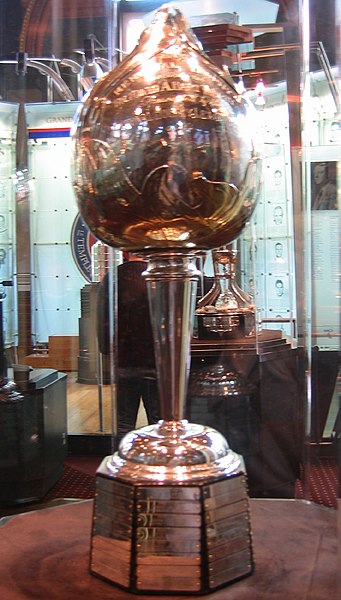
The Hart Trophy. The Art Ross. The Pearson. The Richard Trophy. Something called a "Hart-tini." Alexander Ovechkin's Dolce and Gabbana belt buckle. And more than a few absolutely stunning women; to the point where a conversation between a few red-blooded American males is interrupted by a simultaneous "whoa" followed by a simultaneous "yeah" before finishing with a "what were we talking about again?"
One of those women at the party, thrown by the Washington Capitals with Capitol File magazine in Ovechkin's honor, was also on Ovie's arm at the NHL Awards on Thursday night: Elena Alyonka Larionov, the daughter of Russian hockey icon Igor Larionov. She's an aspiring singer who tried out for "American Idol" and earned a "golden ticket" at auditions in Omaha.
It was nice knowing you, Web 2.0 fairy tale romance.
Japers' Rink has a bunch more on Larionov, asking if Ovechkin is planning on a "wonder spawn." Like I said last night: If he and Elena Alyonka Larionov reproduce, the world will finally be blessed with an Ovechkin that can never be accused of not passing the puck enough.
The night was Ovechkin's, and he was reveling in it. Hell, the day was Ovechkin's too, starting with his receiving the key to the city from Mayor Adrian Fenty and telling the crowd, "I have a key for the city. And I'm the president this day in the city, so everybody have fun - and no speed limit."
Washington Capitals owner Ted Leonsis gave a nice tribute to his star player at the party last night, reminding the crowd that Ovechkin remains dedicated to bringing the Stanley Cup to the District and about what he means to the city. "It's a long, long time since Washington D.C. had a most valuable player for a professional sports league. The last was Joe Theismann, I believe, in 1982," he said.
Before the party got really swinging, I had a few words with Ovechkin about the NHL Awards, the launch of his streetwear label and hockey in general.
He didn't watch but one game of the Stanley Cup finals, which is pretty much in keeping with every other player I've ever asked about watching the finals. In Ovechkin's case, seeing the Russians and Crosby play on the stage he hauled ass to try and reach probably wasn't high on his to-do list.
Remember that stunning brunette that modeled his streetwear? Yeah, he's got no clue who she is either, as she was hired for the event without any Ovie input. Not that he minded. "That was nice. She was hot," he said. Meanwhile, Japers and I debated whether Streetwear Babe was more Mini-Angelina or Mini-Megan Fox.
When told he finished ninth in voting for the Lady Byng, Ovechkin made it clear he doesn't fancy himself a "gentlemanly" player. I then told him that there was only one voter from the Professional Hockey Writers Association that didn't have him on their Hart Trophy ballot. I asked if he had any suspects. "Maybe Tarik?" he said, a joking reference to Tarik El-Bashir of the Washington Post.
(Tarik told me that that the Washington Post actually has a policy against their writers voting for awards that could, in theory, give athletes they cover bonuses. So cross him off the list.)
As for his amusing but self-conscious speech at the NHL Awards, Ovechkin said "it was my mistake to read it (off the paper). It's better if I just say it. All I have to do is say thanks." There you go: Next season, Ovie's free-stylin'.
I noted the Hart Trophy over in the corner and asked him if it was heavy. Ovechkin said it definitely was heavier than he'd thought it would be, and told me that I could hold it if I wanted to.
I declined, telling him that I was sure touching the trophy would jinx any chance of me winning the award in the coming years ...
It was a killer good time last night, so thanks to the Caps and Capitol File for that. Hart-tinis (MVP tastes like orange liqueur). Celebrity sightings, like former Georgetown basketball coach John Thompson; former Capitals like Rod Langway and Peter Bondra; the aforementioned bevy of rather amazing women in rather adventurous cocktail dresses.
And yours truly, Japers, Mike "Ordered Chaos" Rucki of On Frozen Blog, Tarik El-Bashir of The Washington Post, Corey Masisak from the Washington Times and Brian McNally of The Examiner finding a nice quiet corner to have a drink (or 10) and talk hockey. Even if many of our conversations were interrupted by a simultaneous "whoa" followed by a simultaneous "yeah" before finishing with a "what were we talking about again?"
Saturday, Jun 14, 2008 1:09 pm EDT
Ovechkin parties, gets friendly with Igor Larionov's daughter
By Greg Wyshynski
There was a lot of eye-candy on display last night at Teatro Goldoni, a rather elegant restaurant on K Street here in D.C.
The Hart Trophy. The Art Ross. The Pearson. The Richard Trophy. Something called a "Hart-tini." Alexander Ovechkin's Dolce and Gabbana belt buckle. And more than a few absolutely stunning women; to the point where a conversation between a few red-blooded American males is interrupted by a simultaneous "whoa" followed by a simultaneous "yeah" before finishing with a "what were we talking about again?"
One of those women at the party, thrown by the Washington Capitals with Capitol File magazine in Ovechkin's honor, was also on Ovie's arm at the NHL Awards on Thursday night: Elena Alyonka Larionov, the daughter of Russian hockey icon Igor Larionov. She's an aspiring singer who tried out for "American Idol" and earned a "golden ticket" at auditions in Omaha.
It was nice knowing you, Web 2.0 fairy tale romance.
Japers' Rink has a bunch more on Larionov, asking if Ovechkin is planning on a "wonder spawn." Like I said last night: If he and Elena Alyonka Larionov reproduce, the world will finally be blessed with an Ovechkin that can never be accused of not passing the puck enough.
The night was Ovechkin's, and he was reveling in it. Hell, the day was Ovechkin's too, starting with his receiving the key to the city from Mayor Adrian Fenty and telling the crowd, "I have a key for the city. And I'm the president this day in the city, so everybody have fun - and no speed limit."
Washington Capitals owner Ted Leonsis gave a nice tribute to his star player at the party last night, reminding the crowd that Ovechkin remains dedicated to bringing the Stanley Cup to the District and about what he means to the city. "It's a long, long time since Washington D.C. had a most valuable player for a professional sports league. The last was Joe Theismann, I believe, in 1982," he said.
Before the party got really swinging, I had a few words with Ovechkin about the NHL Awards, the launch of his streetwear label and hockey in general.
He didn't watch but one game of the Stanley Cup finals, which is pretty much in keeping with every other player I've ever asked about watching the finals. In Ovechkin's case, seeing the Russians and Crosby play on the stage he hauled ass to try and reach probably wasn't high on his to-do list.
Remember that stunning brunette that modeled his streetwear? Yeah, he's got no clue who she is either, as she was hired for the event without any Ovie input. Not that he minded. "That was nice. She was hot," he said. Meanwhile, Japers and I debated whether Streetwear Babe was more Mini-Angelina or Mini-Megan Fox.
When told he finished ninth in voting for the Lady Byng, Ovechkin made it clear he doesn't fancy himself a "gentlemanly" player. I then told him that there was only one voter from the Professional Hockey Writers Association that didn't have him on their Hart Trophy ballot. I asked if he had any suspects. "Maybe Tarik?" he said, a joking reference to Tarik El-Bashir of the Washington Post.
(Tarik told me that that the Washington Post actually has a policy against their writers voting for awards that could, in theory, give athletes they cover bonuses. So cross him off the list.)
As for his amusing but self-conscious speech at the NHL Awards, Ovechkin said "it was my mistake to read it (off the paper). It's better if I just say it. All I have to do is say thanks." There you go: Next season, Ovie's free-stylin'.
I noted the Hart Trophy over in the corner and asked him if it was heavy. Ovechkin said it definitely was heavier than he'd thought it would be, and told me that I could hold it if I wanted to.
I declined, telling him that I was sure touching the trophy would jinx any chance of me winning the award in the coming years ...
It was a killer good time last night, so thanks to the Caps and Capitol File for that. Hart-tinis (MVP tastes like orange liqueur). Celebrity sightings, like former Georgetown basketball coach John Thompson; former Capitals like Rod Langway and Peter Bondra; the aforementioned bevy of rather amazing women in rather adventurous cocktail dresses.
And yours truly, Japers, Mike "Ordered Chaos" Rucki of On Frozen Blog, Tarik El-Bashir of The Washington Post, Corey Masisak from the Washington Times and Brian McNally of The Examiner finding a nice quiet corner to have a drink (or 10) and talk hockey. Even if many of our conversations were interrupted by a simultaneous "whoa" followed by a simultaneous "yeah" before finishing with a "what were we talking about again?"
today in the news...
the gay people can get married in california now...
i bet jesus is rolling in his grave.
please note that was suppose to be funny.
i bet jesus is rolling in his grave.
please note that was suppose to be funny.
Saturday, June 14, 2008

Monday, June 9, 2008
http://hotjobs.yahoo.com/career-articles-the_big_question_why_should_i_hire_you-379
i thought this may be an interesting article to someone that is looking for a new job so that is why i put it up here.
i thought this may be an interesting article to someone that is looking for a new job so that is why i put it up here.
bottled water is hurting the internet too.
http://www.usatoday.com/news/nation/environment/2008-06-07-bottled-water_N.htm?se=yahoorefer
this article was about how bottled water is hurting the enviroment but just now when i click on the link it took me to a blank page.
this article was about how bottled water is hurting the enviroment but just now when i click on the link it took me to a blank page.
http://news.aol.com/story/_a/coroner-seeks-identities-of-killers/20080609091009990001?icid=100214839x1203740369x1200141863
a very sad but interesting article.
a very sad but interesting article.
Saturday, June 7, 2008
http://dating.personals.yahoo.com/singles/gettingstarted/9064/dating-challenge-crossing-the-friend-zone;_ylc=X3oDMTRpZ2Jpa2ZxBF9HA3BlcnNvbmFscwRfUwMyNzE2MTQ5BF9zAzIwMjMzMDAwMTEEawNEYXRpbmcgQ2hhbGxlbmdlOiBDcm9zc2luZyB0aGUgRnJpZW5kIFpvbmUEc2VjA2ZwX3RvZGF5B
Dating Challenge: Crossing the 'Friend Zone'
By Andrea Syrtash, ONDating Special to Yahoo! Personals Updated: May 29, 2008
You've had feelings for your friend for a while and you're worried about crossing the line and ruining the friendship. That's not really true, of course, but that's what you keep telling yourself so you can justify not putting yourself on the line and risking rejection.
Sure -- it's possible to love a friend of the opposite sex without picturing him or her in bed. Having feelings for your friend doesn't necessarily prove Harry's theory in "When Harry Met Sally" who famously declared that "No man can be friends with a woman that he finds attractive. He always wants to have sex with her."
There are exceptions to Harry's rule, but one thing is certain -- being seen as just a friend by all the people you want to date can be frustrating. So here are a few ways to prevent being stuck in (cue scary music): 'The Friend Zone':
1. Do Flirt
It's okay if romance is on your brain when you greet your friend. In fact, it can fuel the chemistry. It's good for your friend to catch you subtly checking him or her out. As long as you're not drooling or gawking, it can be sexy. You want your friend to think he or she imagined the look. Light touching and sincere and specific compliments are great for flirting, too.
2. Don't Be the Problem Solver
Are you on speed dial every time your friend needs something fixed or wants to process a bad relationship? It's nice to help your friend occasionally, but make sure you're not the one he or she associates with problems.
If you do come over to help, mention that you're happy to assist for an hour but have plans after that. Better to remain a little mysterious and have your friend wondering who else is getting your attention.
3. Have Fun
Create unique memories. You're aware of your friend's passions, so initiate fun and interesting activities that you know your friend will enjoy but isn't doing with others.
And -- if someone has dumped you, confide in a friend you don't have feelings for! Remember to keep an upbeat attitude and stay confident -- those are two of the most attractive qualities cited by singles when looking for a mate.
Of course, not every friendship ends with a romantic happy ending and you may have to be prepared that your crush just wants to stay your friend. You'll have to decide if that's enough for you.
In the meantime, if you feel like you often end up in the friend zone with people you want to date, plant some of these seeds and see if anything grows in your relationship. Sometimes a glass of wine or a flirtatious exchange can change the dynamic... and you look at each other and wonder why it took so long.
Dating Challenge: Crossing the 'Friend Zone'
By Andrea Syrtash, ONDating Special to Yahoo! Personals Updated: May 29, 2008
You've had feelings for your friend for a while and you're worried about crossing the line and ruining the friendship. That's not really true, of course, but that's what you keep telling yourself so you can justify not putting yourself on the line and risking rejection.
Sure -- it's possible to love a friend of the opposite sex without picturing him or her in bed. Having feelings for your friend doesn't necessarily prove Harry's theory in "When Harry Met Sally" who famously declared that "No man can be friends with a woman that he finds attractive. He always wants to have sex with her."
There are exceptions to Harry's rule, but one thing is certain -- being seen as just a friend by all the people you want to date can be frustrating. So here are a few ways to prevent being stuck in (cue scary music): 'The Friend Zone':
1. Do Flirt
It's okay if romance is on your brain when you greet your friend. In fact, it can fuel the chemistry. It's good for your friend to catch you subtly checking him or her out. As long as you're not drooling or gawking, it can be sexy. You want your friend to think he or she imagined the look. Light touching and sincere and specific compliments are great for flirting, too.
2. Don't Be the Problem Solver
Are you on speed dial every time your friend needs something fixed or wants to process a bad relationship? It's nice to help your friend occasionally, but make sure you're not the one he or she associates with problems.
If you do come over to help, mention that you're happy to assist for an hour but have plans after that. Better to remain a little mysterious and have your friend wondering who else is getting your attention.
3. Have Fun
Create unique memories. You're aware of your friend's passions, so initiate fun and interesting activities that you know your friend will enjoy but isn't doing with others.
And -- if someone has dumped you, confide in a friend you don't have feelings for! Remember to keep an upbeat attitude and stay confident -- those are two of the most attractive qualities cited by singles when looking for a mate.
Of course, not every friendship ends with a romantic happy ending and you may have to be prepared that your crush just wants to stay your friend. You'll have to decide if that's enough for you.
In the meantime, if you feel like you often end up in the friend zone with people you want to date, plant some of these seeds and see if anything grows in your relationship. Sometimes a glass of wine or a flirtatious exchange can change the dynamic... and you look at each other and wonder why it took so long.
in a little bit i'm going to get lunch.
the following article can be found at this web address.
http://www.miamiherald.com/457/story/560121.html
i thought this article was interesting.
DRUG STUDY
Viagra might help cyclists cheat
The University of Miami is testing whether Viagra is a performance enhancer for cyclists.
Posted on Thu, Jun. 05, 2008
By LINDA ROBERTSon
NURI VALLBONA/MIAMI HERALD STAFF
Tony Stover, a senior at the University of Miami, breathes in air that has less oxygen in order to simulate high altitude as he prepares to exercise on a bike to test the performance enhancing abilities of Viagra in helping cyclists. The study is being conducted at the University of Miami.
Untold numbers of men -- and their partners -- can attest to Viagra as a performance enhancer in the bedroom.
Can it also perk up performance in a bicycling race?
Scientists at the University of Miami are studying whether sildenafil citrate can improve the speed of cyclists riding at altitude. The World Anti-Doping Agency is funding the two-year project to determine if Viagra should be added to the list of banned drugs in sports, joining steroids, human growth hormone and EPO.
At a lab on the Coral Gables campus, cyclists swallow a 50-milligram Viagra pill or placebo, step onto a stationary bike, warm up, then pedal at race pace for 3.6 miles while breathing oxygen-reduced air that simulates the effect of riding on a 12,800-foot mountain.
The Tour de Romance? No. None of the subjects has had an erection.
''If they did, they're wearing Spandex shorts anyway,'' said senior research associate Mark Stoutenberg, who is used to joking about his experiment. 'It's a great topic of conversation at parties -- `Hey, this guy is testing Viagra.' ''
Viagra causes dilation of the blood vessels, working on receptors in the lungs and genitalia. But it won't cause an erection without stimulation.
Tony Stover, 21, an exercise physiology major and triathlete, was hesitant when Stoutenberg recruited him for the study.
But after his ride, Stover was a little winded but fine. ''I figured if a 70-year-old man can handle it, I should be able to,'' he said.
What about the vaunted six-hour potency span of Viagra, enabling men to be ready at the ideal moment?
''I've got to keep my mind in the right place for six hours, so I stay in the library,'' Stover said.
The atmosphere inside the lab is also unlikely to trigger any titillating thoughts, Stoutenberg said. Riders are hooked to monitors and a mask, and the walls are adorned with photos of mountain peaks and Lance Armstrong -- not Playboy centerfolds.
''We tested ourselves when piloting the project,'' said Kevin Jacobs, principal investigator and an assistant professor of exercise physiology.
``The most common side effect is headache.''
Viagra is hyped in suggestive commercials featuring couples frolicking on the beach or smirking at each other across a candlelit table. Might we soon see it endorsed on the jerseys of pro cyclists climbing through the Alps?
Unethical athletes are always looking for drugs to give them an extra edge. They've taken substances used to fatten cattle, strengthen race horses, relieve anemia and reverse sleeping disorders.
Viagra is widely rumored to be the latest aid in cycling, a sport sullied by doping scandals in recent years. At the Giro d'Italia last month, the Gerolsteiner team suspended Andrea Moletta after Italian police searched the car of Moletta's father and found 82 Viagra pills as well as syringes hidden inside tubes of toothpaste, according to La Gazzetta dello Sport and cyclingnews.com.
''My cycling friends tell me they know people who are taking it in Colorado and California,'' said Stoutenberg, an accomplished triathlete.
Viagra improved blood flow when the vessels were constricted at high altitudes in four out of 10 athletes tested in a 2006 study at Stanford. But how much faster an athlete can go is unclear. The UM study, much broader in scope and including women, should provide more enlightening data on cardiac output.
In theory, Viagra could help cyclists, runners or cross-country skiers at high altitudes.
''If you're an athlete who has problems at altitude, Viagra may bring you up to the level of athletes who don't have problems,'' Jacobs said. ``But it doesn't look like an across-the-board enhancer. It's probably not the magic pill athletes are looking for.''
http://www.miamiherald.com/457/story/560121.html
i thought this article was interesting.
DRUG STUDY
Viagra might help cyclists cheat
The University of Miami is testing whether Viagra is a performance enhancer for cyclists.
Posted on Thu, Jun. 05, 2008
By LINDA ROBERTSon
NURI VALLBONA/MIAMI HERALD STAFF
Tony Stover, a senior at the University of Miami, breathes in air that has less oxygen in order to simulate high altitude as he prepares to exercise on a bike to test the performance enhancing abilities of Viagra in helping cyclists. The study is being conducted at the University of Miami.
Untold numbers of men -- and their partners -- can attest to Viagra as a performance enhancer in the bedroom.
Can it also perk up performance in a bicycling race?
Scientists at the University of Miami are studying whether sildenafil citrate can improve the speed of cyclists riding at altitude. The World Anti-Doping Agency is funding the two-year project to determine if Viagra should be added to the list of banned drugs in sports, joining steroids, human growth hormone and EPO.
At a lab on the Coral Gables campus, cyclists swallow a 50-milligram Viagra pill or placebo, step onto a stationary bike, warm up, then pedal at race pace for 3.6 miles while breathing oxygen-reduced air that simulates the effect of riding on a 12,800-foot mountain.
The Tour de Romance? No. None of the subjects has had an erection.
''If they did, they're wearing Spandex shorts anyway,'' said senior research associate Mark Stoutenberg, who is used to joking about his experiment. 'It's a great topic of conversation at parties -- `Hey, this guy is testing Viagra.' ''
Viagra causes dilation of the blood vessels, working on receptors in the lungs and genitalia. But it won't cause an erection without stimulation.
Tony Stover, 21, an exercise physiology major and triathlete, was hesitant when Stoutenberg recruited him for the study.
But after his ride, Stover was a little winded but fine. ''I figured if a 70-year-old man can handle it, I should be able to,'' he said.
What about the vaunted six-hour potency span of Viagra, enabling men to be ready at the ideal moment?
''I've got to keep my mind in the right place for six hours, so I stay in the library,'' Stover said.
The atmosphere inside the lab is also unlikely to trigger any titillating thoughts, Stoutenberg said. Riders are hooked to monitors and a mask, and the walls are adorned with photos of mountain peaks and Lance Armstrong -- not Playboy centerfolds.
''We tested ourselves when piloting the project,'' said Kevin Jacobs, principal investigator and an assistant professor of exercise physiology.
``The most common side effect is headache.''
Viagra is hyped in suggestive commercials featuring couples frolicking on the beach or smirking at each other across a candlelit table. Might we soon see it endorsed on the jerseys of pro cyclists climbing through the Alps?
Unethical athletes are always looking for drugs to give them an extra edge. They've taken substances used to fatten cattle, strengthen race horses, relieve anemia and reverse sleeping disorders.
Viagra is widely rumored to be the latest aid in cycling, a sport sullied by doping scandals in recent years. At the Giro d'Italia last month, the Gerolsteiner team suspended Andrea Moletta after Italian police searched the car of Moletta's father and found 82 Viagra pills as well as syringes hidden inside tubes of toothpaste, according to La Gazzetta dello Sport and cyclingnews.com.
''My cycling friends tell me they know people who are taking it in Colorado and California,'' said Stoutenberg, an accomplished triathlete.
Viagra improved blood flow when the vessels were constricted at high altitudes in four out of 10 athletes tested in a 2006 study at Stanford. But how much faster an athlete can go is unclear. The UM study, much broader in scope and including women, should provide more enlightening data on cardiac output.
In theory, Viagra could help cyclists, runners or cross-country skiers at high altitudes.
''If you're an athlete who has problems at altitude, Viagra may bring you up to the level of athletes who don't have problems,'' Jacobs said. ``But it doesn't look like an across-the-board enhancer. It's probably not the magic pill athletes are looking for.''
Friday, June 6, 2008
i think its safe now to plug my laptop back in.
an interesting article about sports nutrition from the ny times, and i just burped.
http://www.nytimes.com/2008/06/05/health/nutrition/05Best.html?pagewanted=1&_r=2&ref=dining&adxnnlx=1212808172-1GzENQ81ssgwgOwrlxl0sw
Personal Best
Real Thought for Food for Long Workouts
By GINA KOLATA
Published: June 5, 2008
DR. MARK TARNOPOLSKY, a muscle physiology researcher at McMaster University in Canada and a physician, knows all about the exhortations by supplement makers and many nutritionists on what to eat and when to eat it for optimal performance.
The idea is that you are supposed to consume carbohydrates and proteins in a magical four-to-one ratio during endurance events like a long run or bike ride, and right after. The belief is that such nutritional diligence will improve your performance and speed your recovery.
Dr. Tarnopolsky, a 45-year-old trail runner and adventure racer, might be expected to seize upon the nutritional advice. (He won the Ontario trail running series in 2004, 2005 and 2006.)
So might his colleague, Stuart Phillips, a 41-year-old associate professor of kinesiology at McMaster who played rugby for Canada’s national team and now plays it for fun. He also runs, lifts weights and studies nutrition and performance.
In fact, neither researcher regularly uses energy drinks or energy bars. They just drink water, and eat real food. Dr. Tarnopolsky drinks fruit juice; Dr. Phillips eats fruit. And neither one feels a need to ingest a special combination of protein and carbohydrates within a short window of time, a few hours after exercising.
There are grains of truth to the nutrition advice, they and other experts say. But, as so often happens in sports, those grains of truth have been expanded into dictums and have formed the basis for an entire industry in “recovery” products.
They line the shelves of specialty sports stores and supermarkets with names like Accelerade drink, Endurox R4 powder, PowerBar Recovery bar.
“It does seem to me that as a group, athletes are particularly gullible,” said Michael Rennie, a physiologist at the University of Nottingham in England who studies muscle metabolism.
The idea that what you eat and when you eat it will make a big difference in your performance and recovery “is wishful thinking,” said Dr. Rennie, a 61-year-old who was a competitive swimmer and also used to play water polo and rugby.
Here is what is known about proteins, carbohydrates and performance.
During exercise, muscles stop the biochemical reactions used to maintain themselves such as replacing and resynthesizing the proteins needed for day to day activities. It’s not that exercise is damaging your muscles; it’s that they halt the maintenance process until exercise is over.
To do this maintenance, muscles must make protein, and to do so they need to absorb amino acids, the constituent parts of proteins, from the blood. Just after exercise, perhaps for a period no longer than a couple of hours, the protein-building processes of muscle cells are especially receptive to amino acids. That means that if you consume protein, your muscles will use it to quickly replenish proteins that were not made during exercise.
But muscles don’t need much protein, researchers say. Twenty grams is as much as a 176-pound man’s muscles can take. Women, who are smaller and have smaller muscles even compared to their body sizes, need less.
Dr. Rennie said that 10 to 15 grams of protein is probably adequate for any adult. And you don’t need a special drink or energy bar to get it. One egg has 6 grams of protein. Two ounces of chicken has more than 12 grams.
Muscles also need to replenish glycogen, their fuel supply, after a long exercise session — two hours of running, for example. For that they need carbohydrates. Muscle cells are especially efficient in absorbing carbohydrates from the blood just after exercise.
Once again, muscles don’t need much; about one gram of carbohydrate per kilogram of body weight is plenty, Dr. Tarnopolsky said. He weighs 70 kilograms, or 154 pounds, which means he would need 70 grams of carbohydrates, or say, 27 ounces of fruit juice, he said.
Asker Jeukendrup, a 38-year-old 14-time Ironman-distance finisher who is an exercise physiologist and nutritionist at the University of Birmingham in England said the fastest glycogen replacement takes place in the four hours after exercise. Even so, most athletes need not worry.
“Most athletes will have at least 24 hours to recover,” Dr. Jeukendrup said. “We really are talking about a group of extremely elite sports people who train twice a day.” For them, he said, it can be necessary to rapidly replenish muscle glycogen.
http://www.nytimes.com/2008/06/05/health/nutrition/05Best.html?pagewanted=1&_r=2&ref=dining&adxnnlx=1212808172-1GzENQ81ssgwgOwrlxl0sw
Personal Best
Real Thought for Food for Long Workouts
By GINA KOLATA
Published: June 5, 2008
DR. MARK TARNOPOLSKY, a muscle physiology researcher at McMaster University in Canada and a physician, knows all about the exhortations by supplement makers and many nutritionists on what to eat and when to eat it for optimal performance.
The idea is that you are supposed to consume carbohydrates and proteins in a magical four-to-one ratio during endurance events like a long run or bike ride, and right after. The belief is that such nutritional diligence will improve your performance and speed your recovery.
Dr. Tarnopolsky, a 45-year-old trail runner and adventure racer, might be expected to seize upon the nutritional advice. (He won the Ontario trail running series in 2004, 2005 and 2006.)
So might his colleague, Stuart Phillips, a 41-year-old associate professor of kinesiology at McMaster who played rugby for Canada’s national team and now plays it for fun. He also runs, lifts weights and studies nutrition and performance.
In fact, neither researcher regularly uses energy drinks or energy bars. They just drink water, and eat real food. Dr. Tarnopolsky drinks fruit juice; Dr. Phillips eats fruit. And neither one feels a need to ingest a special combination of protein and carbohydrates within a short window of time, a few hours after exercising.
There are grains of truth to the nutrition advice, they and other experts say. But, as so often happens in sports, those grains of truth have been expanded into dictums and have formed the basis for an entire industry in “recovery” products.
They line the shelves of specialty sports stores and supermarkets with names like Accelerade drink, Endurox R4 powder, PowerBar Recovery bar.
“It does seem to me that as a group, athletes are particularly gullible,” said Michael Rennie, a physiologist at the University of Nottingham in England who studies muscle metabolism.
The idea that what you eat and when you eat it will make a big difference in your performance and recovery “is wishful thinking,” said Dr. Rennie, a 61-year-old who was a competitive swimmer and also used to play water polo and rugby.
Here is what is known about proteins, carbohydrates and performance.
During exercise, muscles stop the biochemical reactions used to maintain themselves such as replacing and resynthesizing the proteins needed for day to day activities. It’s not that exercise is damaging your muscles; it’s that they halt the maintenance process until exercise is over.
To do this maintenance, muscles must make protein, and to do so they need to absorb amino acids, the constituent parts of proteins, from the blood. Just after exercise, perhaps for a period no longer than a couple of hours, the protein-building processes of muscle cells are especially receptive to amino acids. That means that if you consume protein, your muscles will use it to quickly replenish proteins that were not made during exercise.
But muscles don’t need much protein, researchers say. Twenty grams is as much as a 176-pound man’s muscles can take. Women, who are smaller and have smaller muscles even compared to their body sizes, need less.
Dr. Rennie said that 10 to 15 grams of protein is probably adequate for any adult. And you don’t need a special drink or energy bar to get it. One egg has 6 grams of protein. Two ounces of chicken has more than 12 grams.
Muscles also need to replenish glycogen, their fuel supply, after a long exercise session — two hours of running, for example. For that they need carbohydrates. Muscle cells are especially efficient in absorbing carbohydrates from the blood just after exercise.
Once again, muscles don’t need much; about one gram of carbohydrate per kilogram of body weight is plenty, Dr. Tarnopolsky said. He weighs 70 kilograms, or 154 pounds, which means he would need 70 grams of carbohydrates, or say, 27 ounces of fruit juice, he said.
Asker Jeukendrup, a 38-year-old 14-time Ironman-distance finisher who is an exercise physiologist and nutritionist at the University of Birmingham in England said the fastest glycogen replacement takes place in the four hours after exercise. Even so, most athletes need not worry.
“Most athletes will have at least 24 hours to recover,” Dr. Jeukendrup said. “We really are talking about a group of extremely elite sports people who train twice a day.” For them, he said, it can be necessary to rapidly replenish muscle glycogen.
i work in the cat scan department of my doctor's office so this caught my attention.
the web address to the following article is right below this sentence.
http://junkfoodscience.blogspot.com/2008/06/milk-does-tummy-good.html
June 05, 2008
Milk does a tummy good
These researchers thought to question how things have always been done. If you’ve ever had to chug barium before a CT scan of your tummy, this story will sound too good to be true.
For years, countless people have had to force down about 1,200 cc of a barium contrast drink before having CT scans of their abdomen and pelvis to diagnose bowel disorders and abnormalities. The barium coats the insides of the esophagus, stomach and intestine, appearing dark while the intestinal wall appears brighter. The contrast from the barium allows radiologists to better visualize the bowel wall and more clearly delineate the bowel cavity and soft tissue. Barium drinks, however, can come with unpleasant side effects like constipation, diarrhea, nausea and cramping. The acidy-burning taste of the chalky, milky liquid can make getting it down one of the most unpleasant parts of the diagnostic test. Children especially balk at drinking the barium–based drinks.
Researchers at St Luke’s-Roosevelt Hospital in New York City wondered if milk might work just as well.
They conducted a randomized blinded trial of 215 consecutive patients, giving half of the patients whole (full-fat) milk before their CT scans and the other half the usual 0.1% oral barium contrast drink, VoLumen. Two radiologists independently examined the patients’ films, blinded as to what contrast agent each patient had received. They graded the degree of bowel distention and bowel wall visibility. The researchers had presented their preliminary findings at the Scientific Assembly of the Radiological Society of North America meeting in Chicago and the final results were just published in the American Journal of Roentgenology.
Their findings? There was no statistical difference between whole milk and VoLumen as a contrast media for visualizing the bowel wall and bowel distention. The images of the patients given milk were just as useful as the images of the patients given the barium, said Dr. Chi Wan Koo, M.D., lead author. Patients rated the milk as preferable and reported far fewer abdominal side effects. Plus, the researchers noted, milk is considerably cheaper than the $18 VoLumen per patient.
As was reported by Mike Mitka of the Journal of the American Medical Association, “of the 30 to 40 million CT scans performed annually in the United States, about 30% are for abdominal conditions where milk could be used.”
A show of hands as to which drink you’d choose. Now the question is, if strawberry or chocolate-flavored milk works just as well. :-)
posted by Sandy at 6/05/2008
the web address to the following article is right below this sentence.
http://junkfoodscience.blogspot.com/2008/06/milk-does-tummy-good.html
June 05, 2008
Milk does a tummy good
These researchers thought to question how things have always been done. If you’ve ever had to chug barium before a CT scan of your tummy, this story will sound too good to be true.
For years, countless people have had to force down about 1,200 cc of a barium contrast drink before having CT scans of their abdomen and pelvis to diagnose bowel disorders and abnormalities. The barium coats the insides of the esophagus, stomach and intestine, appearing dark while the intestinal wall appears brighter. The contrast from the barium allows radiologists to better visualize the bowel wall and more clearly delineate the bowel cavity and soft tissue. Barium drinks, however, can come with unpleasant side effects like constipation, diarrhea, nausea and cramping. The acidy-burning taste of the chalky, milky liquid can make getting it down one of the most unpleasant parts of the diagnostic test. Children especially balk at drinking the barium–based drinks.
Researchers at St Luke’s-Roosevelt Hospital in New York City wondered if milk might work just as well.
They conducted a randomized blinded trial of 215 consecutive patients, giving half of the patients whole (full-fat) milk before their CT scans and the other half the usual 0.1% oral barium contrast drink, VoLumen. Two radiologists independently examined the patients’ films, blinded as to what contrast agent each patient had received. They graded the degree of bowel distention and bowel wall visibility. The researchers had presented their preliminary findings at the Scientific Assembly of the Radiological Society of North America meeting in Chicago and the final results were just published in the American Journal of Roentgenology.
Their findings? There was no statistical difference between whole milk and VoLumen as a contrast media for visualizing the bowel wall and bowel distention. The images of the patients given milk were just as useful as the images of the patients given the barium, said Dr. Chi Wan Koo, M.D., lead author. Patients rated the milk as preferable and reported far fewer abdominal side effects. Plus, the researchers noted, milk is considerably cheaper than the $18 VoLumen per patient.
As was reported by Mike Mitka of the Journal of the American Medical Association, “of the 30 to 40 million CT scans performed annually in the United States, about 30% are for abdominal conditions where milk could be used.”
A show of hands as to which drink you’d choose. Now the question is, if strawberry or chocolate-flavored milk works just as well. :-)
posted by Sandy at 6/05/2008
i watch hockey night in canada once in a while.
the link below is the source of the article that follows.
http://sports.yahoo.com/nhl/news?slug=cp-nhl_hockey_night_theme&prov=cp&type=lgns
Hockey Night in Canada theme song may be benched permanently from broadcasts
Amit Shilton, THE CANADIAN PRESS Jun 5, 8:26 pm EDT
TORONTO - Hockey fans called a major penalty against the CBC Thursday as the national broadcaster seemed prepared to do away with the Hockey Night in Canada theme - a beloved 40-year-old musical institution as familiar to Canadians as the country’s national anthem.
“CBC won’t get away with that,” said Mary Quigley of Cape Breton, N.S., outside the Hockey Hall of Fame in Toronto. “The Canadian people won’t let them get away with that.”
Websites carrying news of the possible separation of the hockey anthem from Hockey Night in Canada broadcasts quickly got e-mails from people passionate about the theme.
Online petitions were launched. Some fans of the song shared anecdotes.
“In 1990 my son stood up in a crowded restaurant in Tokyo, Japan and ‘sang’ the Hockey Night in Canada theme,” commented a reader on the CBC website carrying the story. “Before he had completed four bars he was joined by various other Canadians he did not know.”
Reports that the theme might be benched next year came when the agency that represents the song’s composer said Thursday that the CBC will no longer use the familiar hockey anthem.
But the head of CBC Sports says the song hasn’t been shelved yet.
“Our negotiations continue and if we can do a deal for the theme that’s reasonable for both sides, we’ll do it,” said CBC Sports executive director Scott Moore in an interview. “It’s a great theme. If we can’t, then we have an alternate direction that we’re excited about and that I think will create controversy and create excitement amongst Canadians.”
“But certainly our first choice would be to keep the theme as it is.”
The licence agreement CBC had with composer Dolores Claman ended with this year’s Stanley Cup playoffs, which wrapped up Wednesday night.
John Ciccone, whose company Copyright Music & Visuals controls use of the song, said he was given a deadline of noon Wednesday to reach a new agreement. Ciccone said the CBC sent him an e-mail later in the afternoon telling him they would not renew the contract.
“We looked at it every different way we could,” he said. “Whatever it takes, let’s try and come up with something.”
Moore said that he was scheduled to speak with Ciccone later Thursday.
It didn’t take long for a public outcry to gather steam over the possibility of a theme change. The story immediately became a hot topic at the water cooler, on radio phone-in shows - some politicians even weighed in with their reaction.
“The Hockey Night in Canada theme - you hear it everywhere,” said Alberta Premier Ed Stelmach. “Even during the summer, you get to a barbecue in rural Alberta and somebody strikes it up after a good (version) of O Canada. And it’s going to disappear and it’s been with us for years and years.”
For many people, the song is wrapped up in hockey days gone by.
“It just brings back memories of Ward Cornell and all those other guys that brought Hockey Night in Canada to us,” said Gary Fiering, who said in Toronto that the song reminds him of watching hockey in the 1970s and ’80s. “It is our national anthem.”
But the idea of change doesn’t bother everyone.
Elizabeth Richards said in Toronto that while she remembers hearing the song as a little girl, she thinks the theme song might need a postmodern edge.
News websites had hundreds of readers weighing in and discussing the cultural significance of the theme.
Moore of CBC Sports said he thinks it is great that people are passionate about the Hockey Night in Canada broadcasts.
“While we want to keep what is a great musical theme, we can’t do it at all costs, we can’t do it with a cloud hanging over our head,” he said.
Moore said one option would be to launch a nationwide contest for musicians to submit themes for consideration.
It cost the public broadcaster about $500 every time it used the theme, but Ciccone doesn’t think the issue is money. One of the ideas Ciccone said he offered involved maintaining the same contract for two years, then increasing the rates by about 15 per cent, an increase he calls an industry standard.
Claman could not be reached for comment but released a statement on the website hockeytheme.com.
“I am saddened by the decision of the CBC to drop the Hockey Night in Canada theme after our lengthy history together. I nevertheless respect its right to move in a new direction.”
Claman wrote the song in 1968 after it was commissioned by McLaren Advertising. The company was looking for something big, adventurous and brave to go with the broadcast.
Despite going through numerous rearrangements, the jingle has become one of Canada’s most recognized tunes.
Claman has written about 2,000 jingles over her career. She is also credited with writing the Ontario theme “A Place To Stand,” which she co-wrote with her husband Richard Morris in 1967.
Updated Jun 5, 8:26 pm EDT
http://sports.yahoo.com/nhl/news?slug=cp-nhl_hockey_night_theme&prov=cp&type=lgns
Hockey Night in Canada theme song may be benched permanently from broadcasts
Amit Shilton, THE CANADIAN PRESS Jun 5, 8:26 pm EDT
TORONTO - Hockey fans called a major penalty against the CBC Thursday as the national broadcaster seemed prepared to do away with the Hockey Night in Canada theme - a beloved 40-year-old musical institution as familiar to Canadians as the country’s national anthem.
“CBC won’t get away with that,” said Mary Quigley of Cape Breton, N.S., outside the Hockey Hall of Fame in Toronto. “The Canadian people won’t let them get away with that.”
Websites carrying news of the possible separation of the hockey anthem from Hockey Night in Canada broadcasts quickly got e-mails from people passionate about the theme.
Online petitions were launched. Some fans of the song shared anecdotes.
“In 1990 my son stood up in a crowded restaurant in Tokyo, Japan and ‘sang’ the Hockey Night in Canada theme,” commented a reader on the CBC website carrying the story. “Before he had completed four bars he was joined by various other Canadians he did not know.”
Reports that the theme might be benched next year came when the agency that represents the song’s composer said Thursday that the CBC will no longer use the familiar hockey anthem.
But the head of CBC Sports says the song hasn’t been shelved yet.
“Our negotiations continue and if we can do a deal for the theme that’s reasonable for both sides, we’ll do it,” said CBC Sports executive director Scott Moore in an interview. “It’s a great theme. If we can’t, then we have an alternate direction that we’re excited about and that I think will create controversy and create excitement amongst Canadians.”
“But certainly our first choice would be to keep the theme as it is.”
The licence agreement CBC had with composer Dolores Claman ended with this year’s Stanley Cup playoffs, which wrapped up Wednesday night.
John Ciccone, whose company Copyright Music & Visuals controls use of the song, said he was given a deadline of noon Wednesday to reach a new agreement. Ciccone said the CBC sent him an e-mail later in the afternoon telling him they would not renew the contract.
“We looked at it every different way we could,” he said. “Whatever it takes, let’s try and come up with something.”
Moore said that he was scheduled to speak with Ciccone later Thursday.
It didn’t take long for a public outcry to gather steam over the possibility of a theme change. The story immediately became a hot topic at the water cooler, on radio phone-in shows - some politicians even weighed in with their reaction.
“The Hockey Night in Canada theme - you hear it everywhere,” said Alberta Premier Ed Stelmach. “Even during the summer, you get to a barbecue in rural Alberta and somebody strikes it up after a good (version) of O Canada. And it’s going to disappear and it’s been with us for years and years.”
For many people, the song is wrapped up in hockey days gone by.
“It just brings back memories of Ward Cornell and all those other guys that brought Hockey Night in Canada to us,” said Gary Fiering, who said in Toronto that the song reminds him of watching hockey in the 1970s and ’80s. “It is our national anthem.”
But the idea of change doesn’t bother everyone.
Elizabeth Richards said in Toronto that while she remembers hearing the song as a little girl, she thinks the theme song might need a postmodern edge.
News websites had hundreds of readers weighing in and discussing the cultural significance of the theme.
Moore of CBC Sports said he thinks it is great that people are passionate about the Hockey Night in Canada broadcasts.
“While we want to keep what is a great musical theme, we can’t do it at all costs, we can’t do it with a cloud hanging over our head,” he said.
Moore said one option would be to launch a nationwide contest for musicians to submit themes for consideration.
It cost the public broadcaster about $500 every time it used the theme, but Ciccone doesn’t think the issue is money. One of the ideas Ciccone said he offered involved maintaining the same contract for two years, then increasing the rates by about 15 per cent, an increase he calls an industry standard.
Claman could not be reached for comment but released a statement on the website hockeytheme.com.
“I am saddened by the decision of the CBC to drop the Hockey Night in Canada theme after our lengthy history together. I nevertheless respect its right to move in a new direction.”
Claman wrote the song in 1968 after it was commissioned by McLaren Advertising. The company was looking for something big, adventurous and brave to go with the broadcast.
Despite going through numerous rearrangements, the jingle has become one of Canada’s most recognized tunes.
Claman has written about 2,000 jingles over her career. She is also credited with writing the Ontario theme “A Place To Stand,” which she co-wrote with her husband Richard Morris in 1967.
Updated Jun 5, 8:26 pm EDT
Subscribe to:
Comments (Atom)